
نمایشنامه کلاسیک و رنسانس - فصل اول
Chapter One: The Nature of Drama
-Drama makes use of plot and characters, develops themes, arouses emotional responses, and may be either literary or commercial.
-Drama is written primarily to be performed.
-Drama normally presents its action:
a) through actors
b) on a stage
c) before an audience

Greek Theater
-Four great Greek playwrights:
-Tragedy:
1) Aeschylus (525 – 456 BC)
2) Sophocles (497 – 406 BC)
3) Euripides (480 – 406 BC)
-Comedy:
4) Aristophanes (446 – 386 BC)
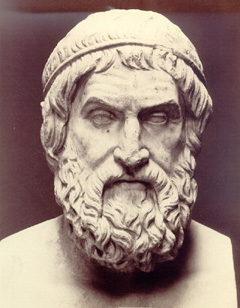
Aeschylus (525 – 456 BC)
-The father of European drama (tragedy)
-The most important idea in the plays of Aeschylus: a firm belief in the power of religion, in Man’s relationship with God (gods)

Sophocles (497 – 406 BC)
-Sophocles represents the climax of Greek drama.
-Many critics consider that, apart from Shakespeare, he is the greatest dramatist the world has ever known.
-His plays are closer to our modern understanding and sympathy, because they seem more real and natural.

Euripides (480 – 406 BC)
-The main change which Euripides made was not in the shape of the plays, but in their meaning. The authority of gods is questioned.

Aristophanes (446 – 386 BC)
-His comedies were not about very general ideas, such as Man’s relations with God, but about local events and conditions.
-Aristophanes wrote about the social problems of his time.

Drama in the Middle Ages & The Renaissance:
-Drama was reborn in the Church. It was dominated by religion, but this time it was Christianity, and not the old religion of the Greeks.
-Their purpose was to give people a clearer understanding of the Gospel’s stories.
-Taken from the Bible known as:
1) Morality Plays
2) Miracle Plays
The Renaissance Theater
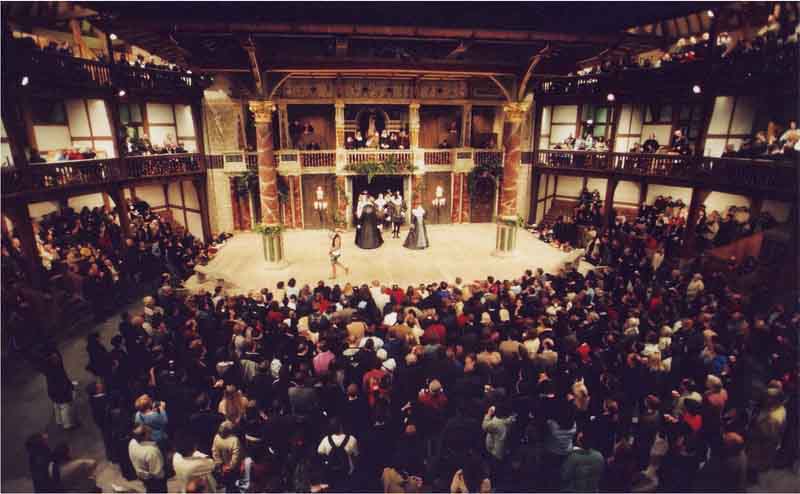
Elizabethan Drama:
-Instead of choosing subjects from the Bible, the new playwrights looked back to Roman times for their subjects.
-Drama became a hobby for people.
-Historical Plays: the history of England’s kings.
-William Shakespeare: the greatest playwright the world has ever known.
Direct & Intensified Influence:
-Because a play presents its action through actors, its impact is direct, immediate, and heightened by the actors’ skills.
-Because a play presents its action before an audience, the experience it creates is communal, and its impact is intensified.

- Soliloquy: Characters are presented as speaking to themselves — that is, they think out loud.
- Aside: Characters turn from the persons with whom they are conversing to speak directly to (or for the benefit of) the audience, thus letting the audience know what they are really thinking or feeling as opposed to what they pretend to be thinking or feeling.
Act: a major division in the action of a play.
Scene: acts are subdivided into scenes. The end of a scene is usually indicated by a dropped curtain, and the end of an act by a dropped curtain and an intermission.
In Greek plays, dancing and chanting by a chorus served as a scene divider.
+ نوشته شده در پنجشنبه ۲۳ مهر ۱۳۹۴ ساعت توسط سید شهاب الدین ساداتی
|
 سید شهاب الدین ساداتی